
Contra Compromise
My Court Appeal and Why it Matters

I intend to fight my case to the end. Christians must not compromise on the truth. Our result in court this week was a further step towards justice.
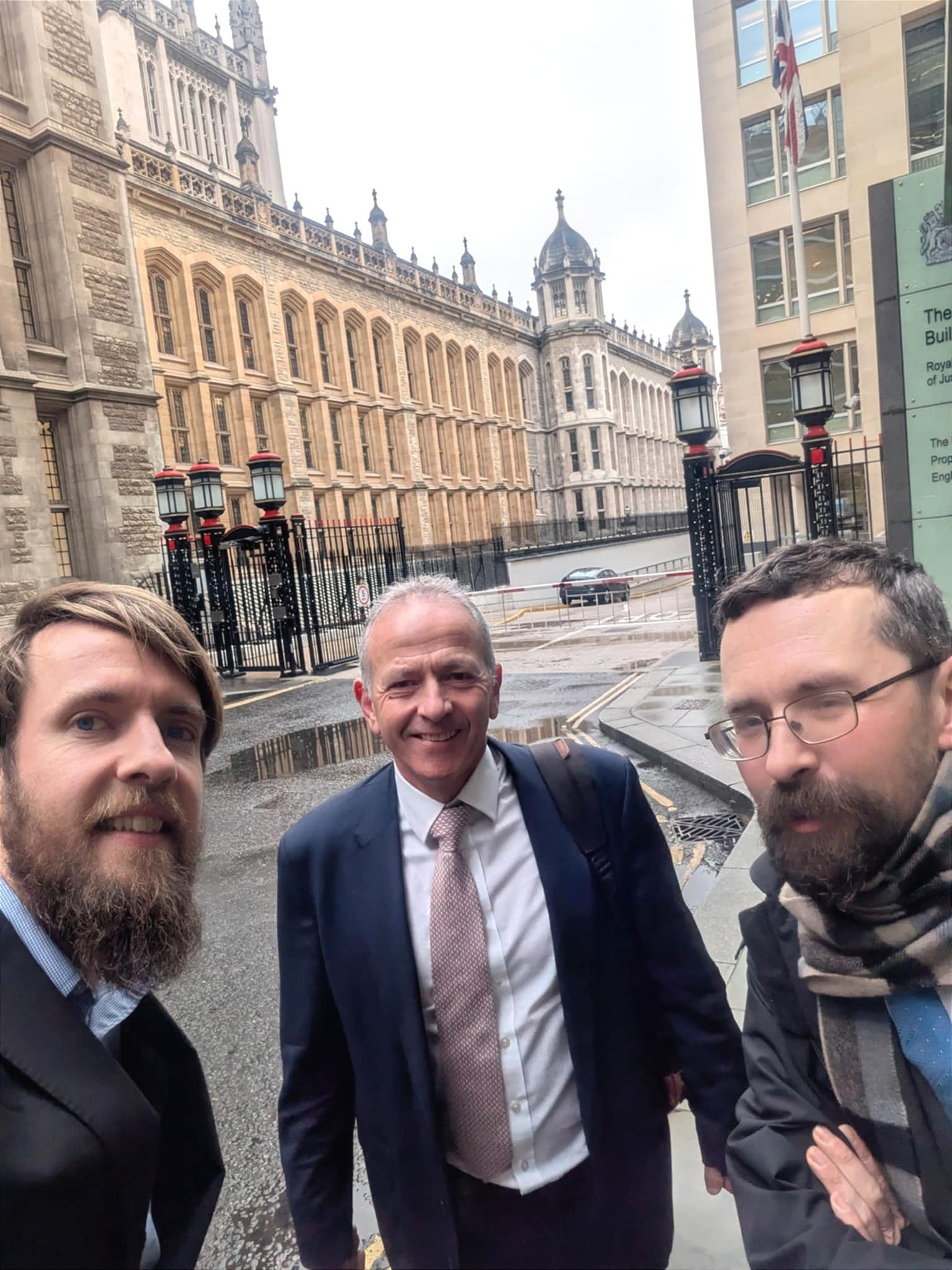
As some of you may know, three years ago I was fired by the evangelical college where I had worked as a programme leader and lecturer for seven years, for a single tweet which challenged evangelical reticence to see the severity of homosexuality invading the Church.
Despite having a good academic CV with over a decade of experience in research, lecturing, and leadership, despite numerous publications in internationally respected journals, and a long track record of excellent student feedback, to this day I cannot find suitable full-time employment as an academic lecturer.
When the twitterstorm was raging, I knew my academic career might be the price to pay for standing for truth. But despite all the stress and disruption the dismissal has caused for my family and I, I do not regret a single word of my tweet. There are times in a Christian’s life when the need of the hour is to speak the truth that needs speaking, when it needs speaking, how it needs speaking. As the apostles said before their accusers, “we cannot but speak of what we have seen and heard” (Acts 4:20).
As ever, I am so grateful to be supported by the Christian Legal Centre. I still remember when I first came across Christian Concern some years ago. A liberal colleague of mine told me how one should not associate with them, how they were bringing Christianity into disrepute in the eyes of the world. How fitting that several years later, this “disreputable” organisation would be the one to come to my aid when I myself had become the “disreputable” one to that very college. God has a funny sense of humour!
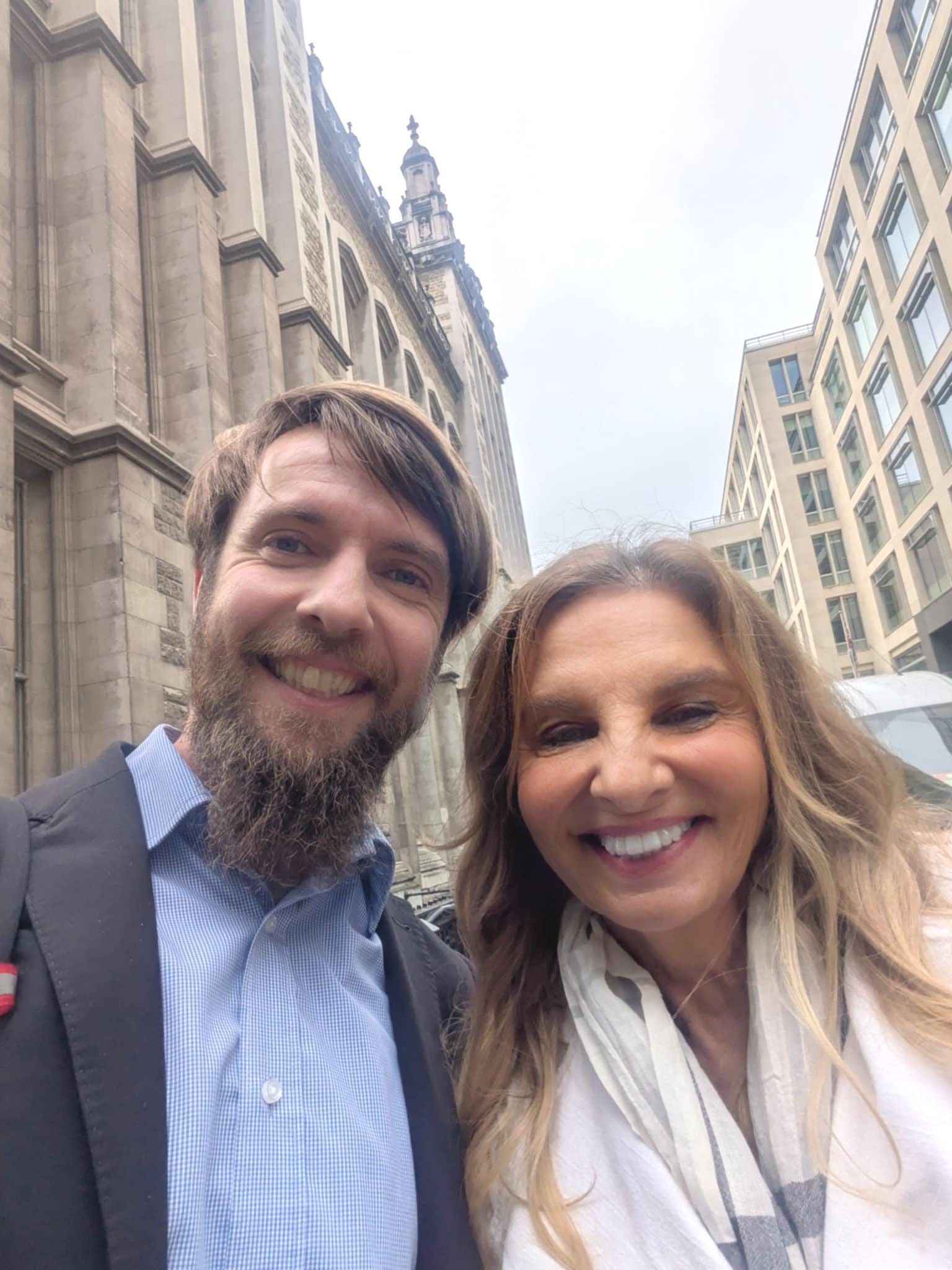
My legal case is essentially about challenging compromise. Cliff College seems to think you can still brand yourself “evangelical” while thinking or saying nothing about the threat to the Gospel posed by the radical incursions of LGBT ideology into previously faithful denominations, churches, and colleges today. They fail to see that compromise is “a gospel issue”.
While the Employment Appeal Tribunal granted us a hearing on select grounds, this week’s hearing was about our refusal to compromise on the grounds of appeal hitherto denied us. This includes the relevance of the expert report that was compiled for the initial tribunal two years ago, and which demonstrated in detail how my tweet was not simply the expression of a fringe personal belief, but was what most evangelical Christians believe about homosexuality, sin, and the Gospel. In court, this report was summarily dismissed as irrelevant before the tribunal even began.
One of the CLC’s enigmatically brilliant minds, Pavel Stroilov (who also happens to be in political exile from Russia for exposing Soviet-era corruptions—but that’s another matter!) compiled an excellent defence to challenge the denial of the additional grounds of appeal. A good deal of the details of this are, frankly, over my head, citing numerous legal precedents and parallel cases of discrimination and unfair dismissal to demonstrate the many holes in the opposition’s logic and in the initial tribunal judgment. One such case is the recent ground-breaking Kristie Higgs ruling (a case also supported by the CLC) where the judge ruled in favour of the school worker who had previously been dismissed for reposting an anti-LGBT perspective which contained far stronger language than mine.
One of the opposition’s defences was that my religious views were not discriminated against because their problem was not with my view itself but merely with the offence and subsequent disrepute it caused when the view was expressed (or, “manifested” in LegalSpeak). As Stroilov aptly highlighted, however, the controversy generated was not the result of any desire of mine to cause pointless offence, but was due to an unjust rejection of the view itself, which is inseparable from its expression.
This is the point I feel I have been making for years. It is even the point I made to the college years before my tweet, when I warned them that if they chose to adopt the Methodist Church’s “contradictory convictions” position on gay marriage, conservative evangelicals would be discriminated against because their belief requires them to speak out against the liberal’s belief and would likely cause offence. This warning went unheeded. I didn’t imagine that I would be the one to exemplify my own point when the college turned on me for expressing the consistent evangelical view on the issue.
Every time I return to the details of my case, I still can’t quite believe how we won’t win. I even thought that three years ago, as I sat scribbling my notes the night before my initial disciplinary hearing with the college. I laid out the logic of my argument in detail, citing Scriptures which say equivalent things to what I said, citing a multitude of positive student feedback, and a decade’s worth of peer-reviewed academic and popular publications where I had expressed in various ways the need for Christians to speak the way I spoke in my now-infamous tweet.
I thought, “I know they are going to want to dismiss me, I know there are people they care about placating who want them to dismiss me, but how on earth will they get away with it?!” The College had already taken legal advice prior to the disciplinary hearing and had probably worked out an intended outcome in advance. Despite the many hours of discussion for the day-long disciplinary hearing, the outcome was the same as it would have been if I hadn’t even turned up, as if I had no defence at all.
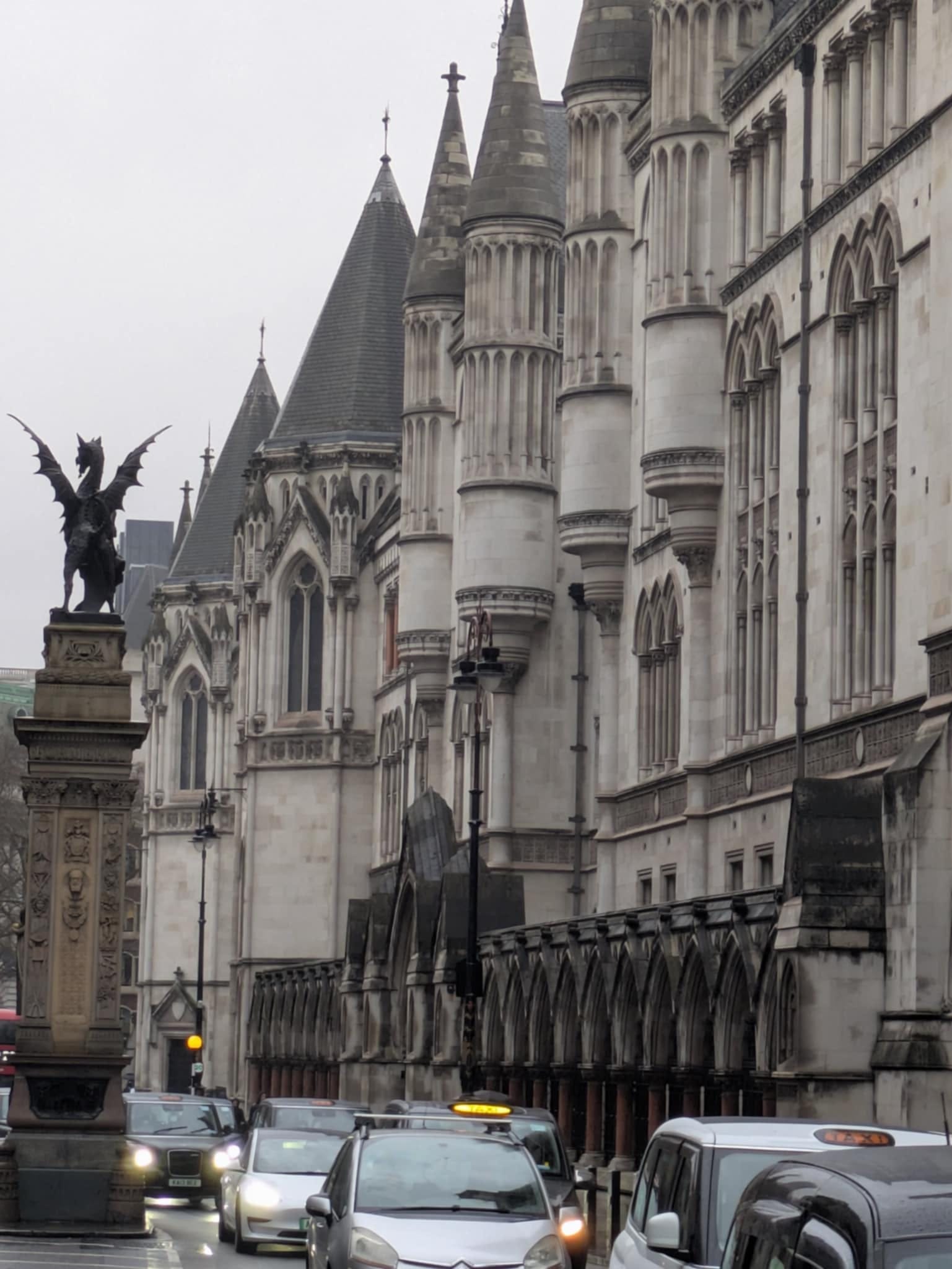
The same could be said of the tribunal in court a year or so later. We had seven days of back and forth, in which the college demonstrably contradicted itself on numerous counts, where its processes and logic were shown to be erroneous, where the injustice of the entire debacle was plain to see, and yet somehow the judge still ruled in their favour, with a judgment that basically restated the College’s case and hardly engaged with the particulars of ours, as if we had barely turned up, and even made basic factual errors regarding issues we had discussed and evidenced at length within the courtroom.
I can only conclude that other forces seem to be at work. Yet this is no reason to lie down and accept it. “Perhaps you are just wrong! Perhaps you are just sore losers!” may come the retort. Well, if that be the case, such detractors must also think God’s Word is wrong, and that Christianity has lost. I am grateful that Christian Concern do not think so, and that they wish to fight on with me in this war against compromise.
For far too long Christians have allowed Christian truth to be gnawed at by the new norms of secular culture until it becomes barely recognisable from the beliefs and expressions of our forefathers in the faith. If Christians are to be free to speak the truth, we must also be free to challenge the invasions—however subtle—which seek to subvert the truth too.
What About the Result?
The verdict on our appeal-for-the-appeal went very well indeed for us. Where we had previously been denied less than half of the grounds of appeal, the judge overturned most of these embargoes and granted us all but two of the grounds we requested.
Although I was still disappointed that we didn’t get all of them (including, for example, the use of the aforementioned expert report, as well as our point that the college was quite obviously biased in the person they chose to undertake the “impartial” investigation on me, as discussed in our podcast on the tribunal, way back when!), even so, it was great that we got everything else we asked for. This again showed that official court judgements are not always as “fixed” as you might think, and why they need to be challenged and held accountable both by reason and by appeal to recognised authorities and precedents, which can often be interpreted in ways that can easily skew the truth.
What was especially interesting was the way that the judge’s simple reading-out of the facts of the whole case in her summation, was itself a declaration of Christian truth to the court system because she had to clearly state why—according to our case—a Christian like me might feel duty-bound to challenge false ideologies which threaten the truth based on Biblical precedents and a commitment to the upholding of truth in the public square.
Indeed, the judge even seemed intrigued to see where the case might lead, noting in her final comments (post-verdict) that it would be interesting to see how this complex case unfolds. She also recommended that the time given to the full appeal hearing be doubled in length, and that it be “upgraded” from a Category B case to a Category A, in recognition of the fact that it could have more significant public implications and affect future legal judgements and laws.
If we do end up winning, that could be a significant triumph indeed if it leads to a significantly greater advance of righteousness and justice beyond just my own situation. In faith, we shall see what God does with all this. I, for one, have given up trying to second-guess where God’s plans might take me!
I admire you Aaron. Thank God for Christian Concern! You are undoubtedly right, but as we all know ‘the world’ to which the courts belong is enemy territory. How any Christian would want to study at college, after what they have done to you beats me. I would not! God bless you and CC in your ongoing battle.
This is great to hear - thanks for the update!